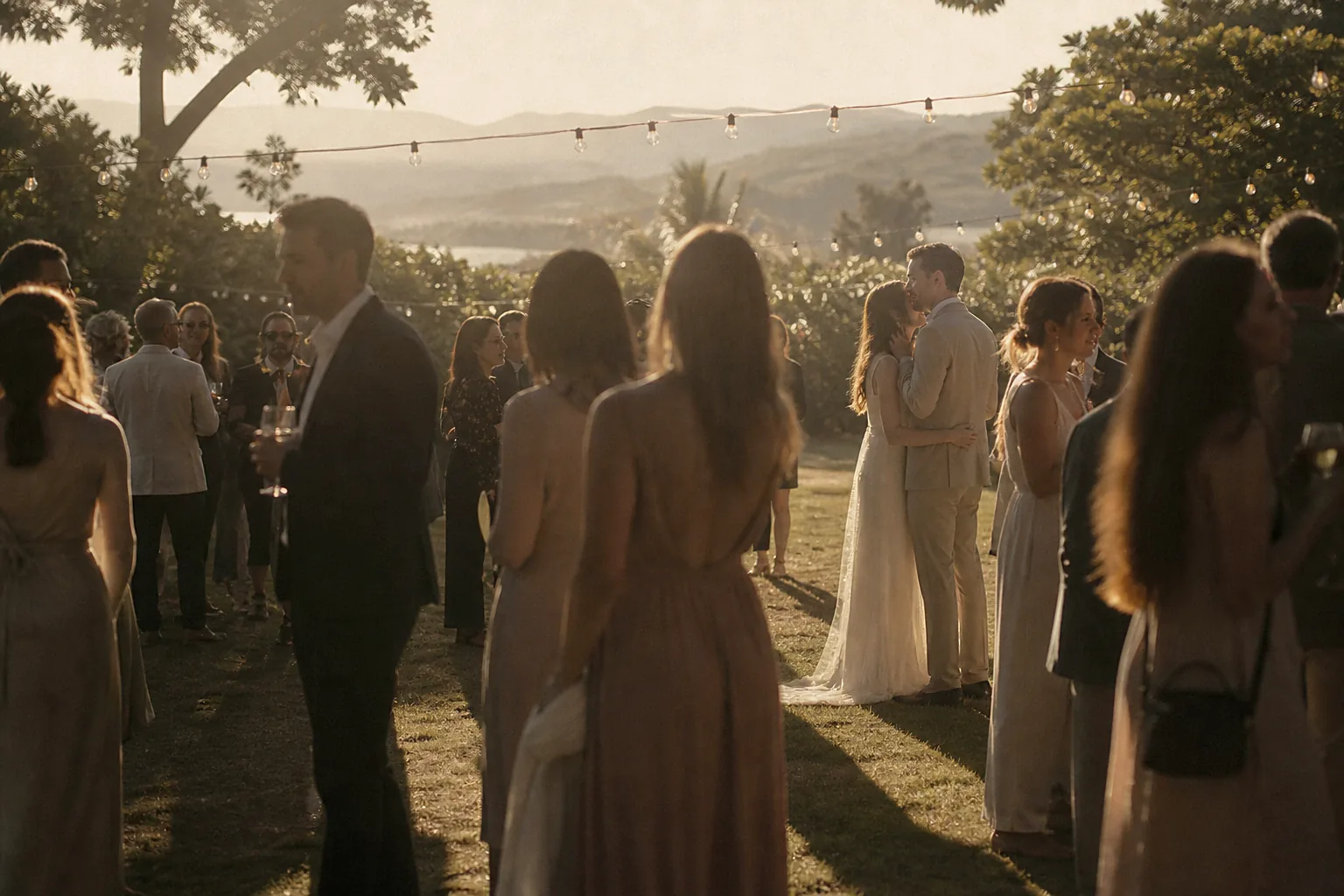
Here is the uncomfortable truth about wedding photography: the photographer matters less than the light does.
I can work in anything — a dark chapel, a strip-lit village hall, midday sun with no shade for a mile. But I cannot make two o’clock in July look like seven o’clock in July, and no amount of equipment or editing changes that.
The good news is that this is entirely within your control, and it costs nothing. It is a matter of what time you write in a document, six months before the day.
Find your sunset first
Before you decide anything else — before the ceremony time, before dinner, before the band — look up what time the sun sets at your venue on your date. Write that number at the top of the page.
Everything else hangs off it. The hour before sunset is the softest, warmest, most flattering light of the entire day, and it is the light in almost every wedding photograph you have ever loved.
You do not need much of it. Twenty minutes, deliberately protected, will produce more framed photographs than the previous six hours combined.
A worked example
Take a September wedding in the Cotswolds. Sunset is roughly 19:20. Working backwards:
- 18:40–19:00 — twenty minutes for the two of you, outside. This is the appointment we are protecting.
- 18:00 — speeches begin, so they are finished before we step out.
- 16:30 — dinner is served. Nothing interesting is photographed while people eat; this is where a long gap should sit.
- 15:00 — drinks, family groups, twenty minutes maximum, done early while everyone is still in one place.
- 14:00 — ceremony.
- 10:30 — getting ready begins, with ninety minutes more than you think you need.
The whole timeline is built by one decision at 18:40 and then reversing out from it.
Left: 18:52. Right: 21:30. Both are good light; only one of them was planned.
Three mistakes I see most often
A ceremony at high noon in high summer. Midday sun is directly overhead, which puts hard shadows under everybody’s eyes and blows out a white dress. If you cannot move the time, choose shade — a tree, a courtyard, a covered arch — and I will do the rest.
Speeches scheduled during sunset. This is the single most common conflict, and it always resolves the same way: the speeches win, because eighty people are sitting down. Put them before the golden hour, not across it.
A winter ceremony at three o’clock. In December, sunset is at 15:55. A three o’clock ceremony means you walk out into darkness. Move it to one, and suddenly the whole afternoon is available.
What to do if the light is simply bad
Sometimes it is. A dark church, a rainy day, a marquee with a plastic window. There is always a plan, and it is usually a smaller and more intimate one: closer framing, fewer wide shots, a lot more attention paid to faces and hands.
The evening also holds a second, quieter window. Once the sun is gone and the venue lights come on, you can step outside for five minutes and get something warmer and stranger than anything from the afternoon. I will always ask for those five minutes.
One appointment, that is all
If you take a single thing from this: put twenty minutes in your timeline, an hour before sunset, and label it. Give it a name so that nobody moves it. Everything else on the day can flex.
That twenty minutes is where your first framed print comes from. I have never once been wrong about this.
— Amanda