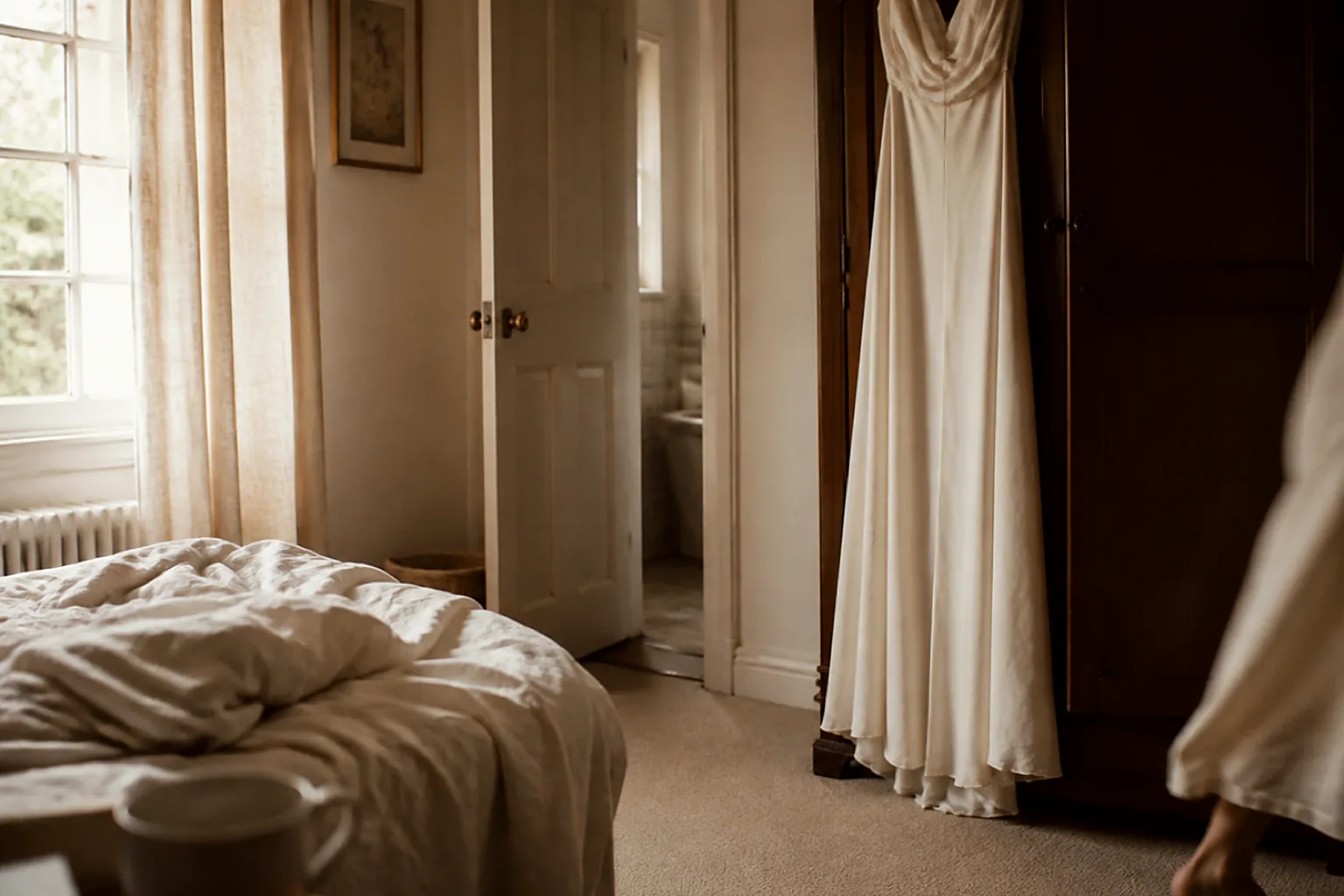
Fern and Callum did something almost nobody does. They woke up on their wedding day, made a pot of coffee, and then did absolutely nothing for three hours.
No hair trial running forty minutes late. No fourteen people in one bedroom. No convoy of cars idling in the lane. Just the two of them, separately, in a borrowed farmhouse with thick walls and small windows, moving slowly through the last morning of a life they were about to change.
I arrived at nine. I was not needed until eleven. I photographed the whole two hours anyway, and those frames make up nearly half of the album they eventually chose.
The hour nobody protects
Almost every wedding timeline I am sent has the same shape. Getting ready is allocated ninety minutes, which is understood by everybody involved to mean sixty. Then the day accelerates and never slows down again until the first dance.
What gets squeezed out is the only part of the day that is still quiet. And quiet, it turns out, is where nearly all of the photographs you will want in thirty years actually live.
The photographs you frame are almost never the ones you planned. They are the ones that happened in the gaps you accidentally left.
Fern spent an hour at the kitchen table in her dressing gown with her sister, both of them barefoot, going through a box of photographs of their grandmother. Nobody suggested it. Nobody scheduled it. It simply happened, because there was room for it to happen.
The buttons took eleven minutes. Nobody was in a hurry about it.
What three hours actually buys you
It is not really about photographs, although you do get better ones. It is about the state you walk into your ceremony in.
Couples who give themselves a slow morning arrive at the aisle already settled. Couples who spend the morning managing a schedule arrive slightly adrenalised, and it shows — not in an ugly way, but in a way I can see in the shoulders in every frame for the first twenty minutes.
- Room for the unplanned. Your father arriving early and sitting on the end of the bed. The dog getting into the room. The rain stopping.
- Light that does not fight you. Morning light through a north-facing window is the best light of the entire day, and it costs nothing.
- A gentler start. You will be photographed for ten or twelve hours. Beginning slowly matters more than you would think.
- Time to actually look at each other. Fern and Callum saw each other once, briefly, through a doorway at half past ten. It is the frame on their landing.
How to build it in
Take whatever number you have written down for getting ready and add ninety minutes to it. That is the whole technique. It will feel excessive when you write it in the timeline and it will feel exactly right on the day.
If you are working with a hair and make-up team, ask them to finish forty-five minutes before you think you need to be ready, rather than fifteen. The buffer is not for delays. The buffer is the thing.
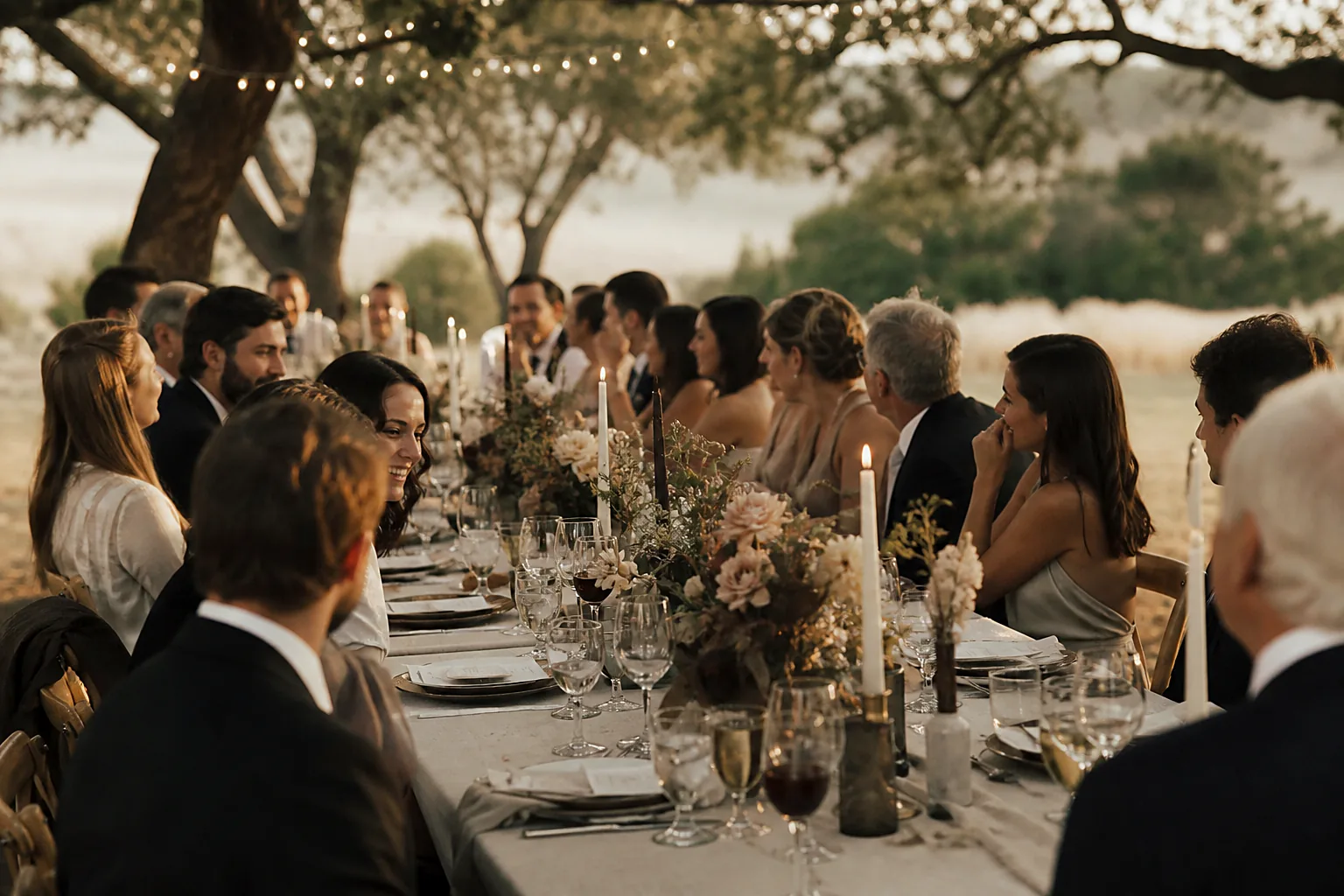
By evening the house was full of eighty people. That morning it held two.
Afterwards
When the gallery went out, Fern wrote back within an hour. She had expected to love the ceremony frames, and she did. But the photograph she had printed large, the one that now hangs in their hallway, is her sister laughing in a dressing gown at a kitchen table at twenty past nine in the morning, before anything at all had happened.
Give yourself the morning. It is the cheapest and best decision on the entire list.
— Amanda