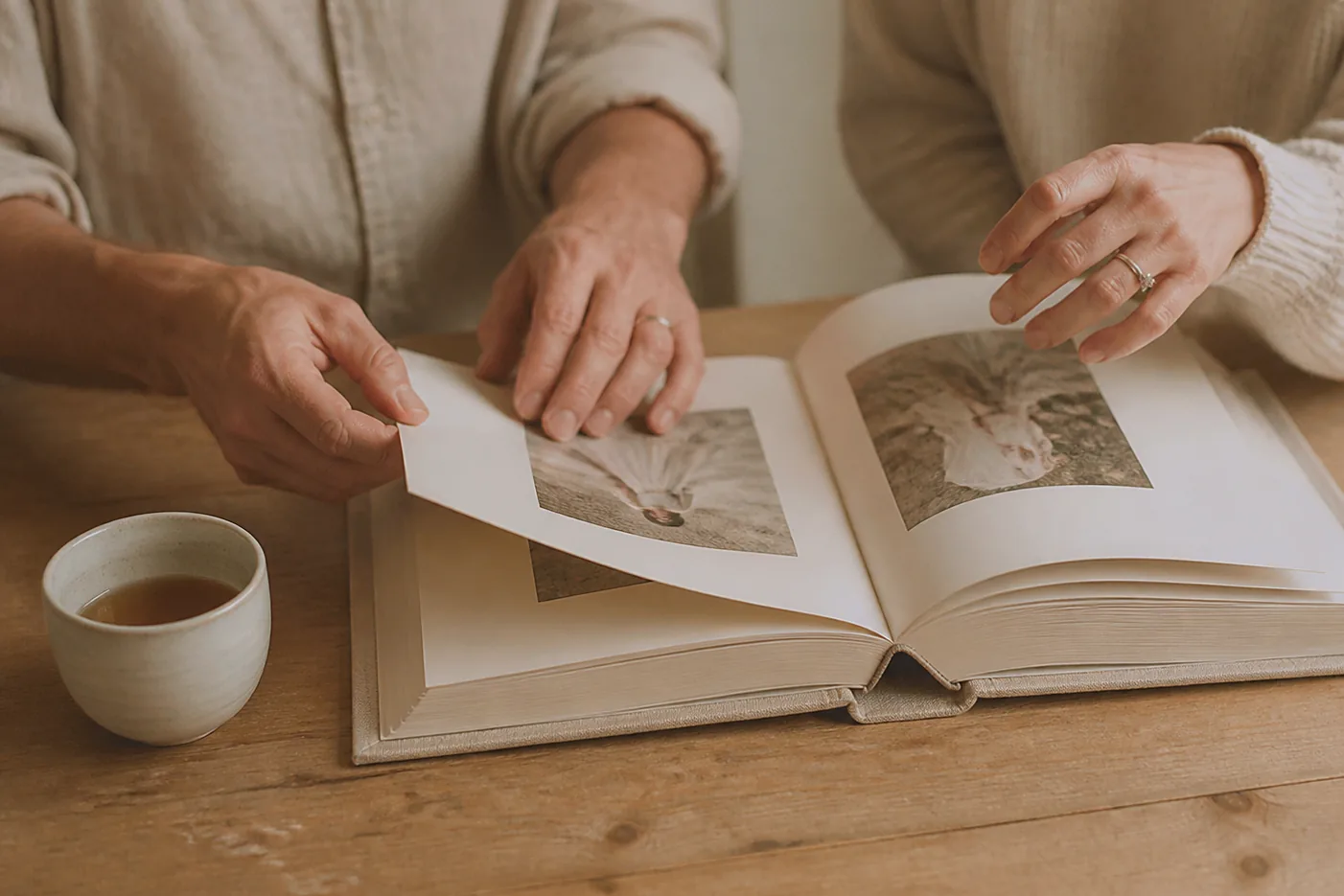
Every collection I offer ends in paper. Not because it is traditional, and not because it is a nice upsell, but because I have watched what happens to the galleries that do not.
They get looked at properly twice. Once on the day they arrive, when the couple sits down with a glass of wine and goes through all seven hundred. And once about a fortnight later, when they show somebody. After that the link goes into an email folder and the folder goes quiet.
The hard drive is not the archive you think it is
I say this as somebody whose entire livelihood is digital files. I keep two local drives, a cloud backup and a three-year retention policy, and I still do not believe that is where your wedding should live.
It is not that the files will be lost, although sometimes they are. It is that nothing about a folder invites you in. Nobody has ever walked past a laptop and stopped.
A photograph you have to go and find is a photograph you will not look at. A photograph on a shelf is one you will pass a thousand times.
What an album actually does
It makes an edit. Seven hundred photographs is a record; forty is a story. The act of choosing which forty — which I do first, and which you then argue with me about — is the part that turns a gallery into something with a beginning and an end.
It also makes the day physical again. Weight in the hands, thick pages, the sound they make. Every couple I have handed an album to has done the same thing: opened it standing up, in the hallway, before they got as far as sitting down.
Oatmeal linen, cotton rag pages, a clamshell box. It should outlast the marriage certificate.
How I make them
Linen-bound, lay-flat, printed on cotton rag paper with pigment inks rated well past a century. The cover is blind-debossed rather than foiled, because foil dates and an impression does not.
I lay out the first design myself, usually in one long evening, working in the order the day happened. Then it goes to you, and you change it. Most couples change three or four spreads. One couple changed thirty-one, and they were right about most of them.
- Thirty spreads is the standard, and covers a full wedding day comfortably.
- Fifty spreads for a weekend, or for a day that genuinely refuses to be edited down.
- Parent copies are the same images at a smaller size. They are, without exception, the most quietly appreciated thing I make.
And the prints
Every collection includes archival prints as well, because an album lives on a shelf and a print lives on a wall. Choose fewer and print them larger. One photograph at forty centimetres will do more for a hallway than nine at postcard size.
The part I actually care about
Somebody who is not born yet is going to take this album off a shelf and open it. They will not know most of the people in it. They will know two of them, or they will know somebody who knew them, and they will look at a page for a long time.
That is the whole reason I still make you a printed album. Everything else is just the reason I can afford to.
— Amanda